A controlled, continuous process designed for consistency, traceability, and real manufacturing use.
Millions of tonnes of rubber are discarded every year. But for manufacturers, the issue isn’t availability — it’s usability.
Can recovered material replace virgin inputs without disrupting performance, supply, or cost? That’s the standard our process is built to meet.
100%
Circular System
A closed-loop process that converts waste rubber into usable materials — returning carbon black, oil, and steel back into industrial supply.
1+ mln
of kilograms proven in production
Our chemists have worked directly with customer formulas in real manufacturing conditions — not just in controlled lab settings.
30 tonnes of rCB recovered daily
Alongside up to 50 tonnes of pyrolysis oil, ensuring continuous, industrial-scale output — not limited or batch-based supply.
100% take-back capability
All production scrap and end-of-life rubber can be recovered and reprocessed — reducing waste streams and improving your operations.
What We Recycle
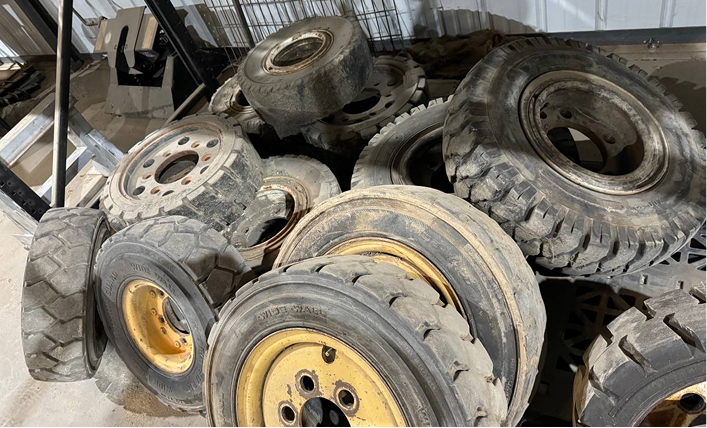
End-of-life fork truck tires
Conveyor belts and rubber scrap
OTR (off-the-road) tires
Flooring materials and mats
Aircraft tires
A Controlled,
Continuous System
Feedstock Preparation
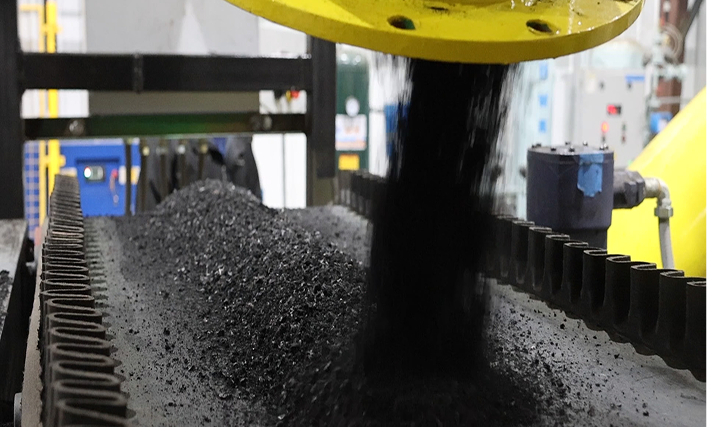
End-of-life tyres and rubber are collected, cleaned, shredded, and milled into ~20 mm granules, with steel removed through magnetic separation — ensuring controlled input material
Material Recovery
Outputs are cooled and separated into pyrolysis oil and non-condensable gas, which is reused to power the system, while solid carbon is recovered simultaneously.
Quality Control and Distribution
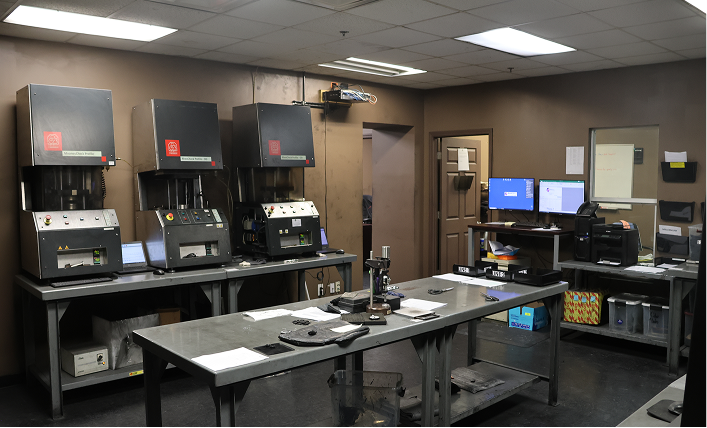
Each batch is tested, documented, and prepared for delivery. Detailed sustainability performance data is available for audits.
01
02
03
04
05
Thermal Conversion (Pyrolysis)
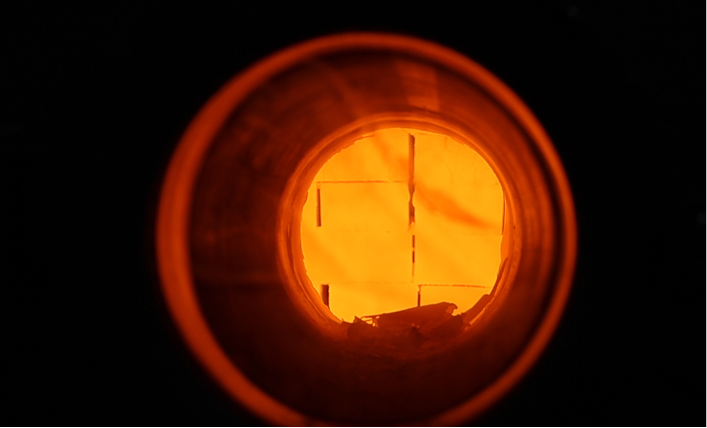
Rubber is decomposed at ~500°C in an oxygen-free, continuous reactor. Remaining volatiles are removed at elevated temperatures, resulting in clean, high-quality recovered carbon black (rCB).
Refinement
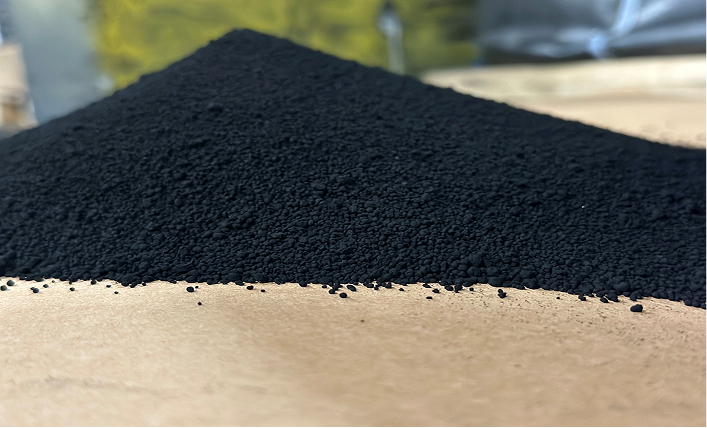
rCB is cooled, milled to ~20 microns, pelletised, and packaged for consistent handling and integration in rubber and masterbatch compounds.
01
Feedstock Preparation
End-of-life tyres and rubber are collected, cleaned, shredded, and milled into ~20 mm granules, with steel removed through magnetic separation — ensuring controlled input material
02
Thermal Conversion (Pyrolysis)
Rubber is decomposed at ~500°C in an oxygen-free, continuous reactor. Remaining volatiles are removed at elevated temperatures, resulting in clean, high-quality recovered carbon black (rCB).
03
Material Recovery
Outputs are cooled and separated into pyrolysis oil and non-condensable gas, which is reused to power the system, while solid carbon is recovered simultaneously.
04
Refinement
rCB is cooled, milled to ~20 microns, pelletised, and packaged for consistent handling and integration in rubber and masterbatch compounds.
05
Quality Control and Distribution
Each batch is tested, documented, and prepared for delivery. Detailed sustainability performance data is available for audits.
Most suppliers stop at producing rCB. That’s where the real work begins.
We work alongside your team to integrate rCB into real production conditions—optimizing formulations, increasing substitution rates, and ensuring consistent performance at scale. Because rCB only creates value when it performs where it actually matters: in your compound.
Three Outputs. Zero Waste.
Every tyre we process is fully recovered. Nothing is discarded.
Ready to Take Virgin Carbon Black Off Your Risk Register?
Whether you’re evaluating rCB or switching suppliers, we’ll assess your formulation, volumes, and carbon targets to show exactly what Revolution rCB can do for your numbers. Contact us to request a sample, get a pricing proposal, or download the technical data sheet.